


Exactitudes: The Photo Book That Reveals the Hidden Patterns of Human Style
What if our belief in personal uniqueness was just an illusion? That’s the provocative idea behind Exactitudes, a long‑running visual project that’s now culminating in a final photo book released in early 2026. Far from a typical fashion or coffee‑table publication, Exactitudes acts as both a cultural document and a sociological experiment — capturing thousands of individuals whose clothing and style align with recognizable social “types.”
Originally launched in 1994 by Dutch photographer Ari Versluis and stylist Ellie Uyttenbroek, Exactitudes began on the streets of Rotterdam as an exploration of subcultural style. Over the next three decades, the pair photographed more than 3,000 people, each selected not for their creativity, but for how clearly they represented specific visual archetypes: from Mohawks and Rockers to “The Girls from Ipanema.”
A Scientific Approach to Fashion and Identity
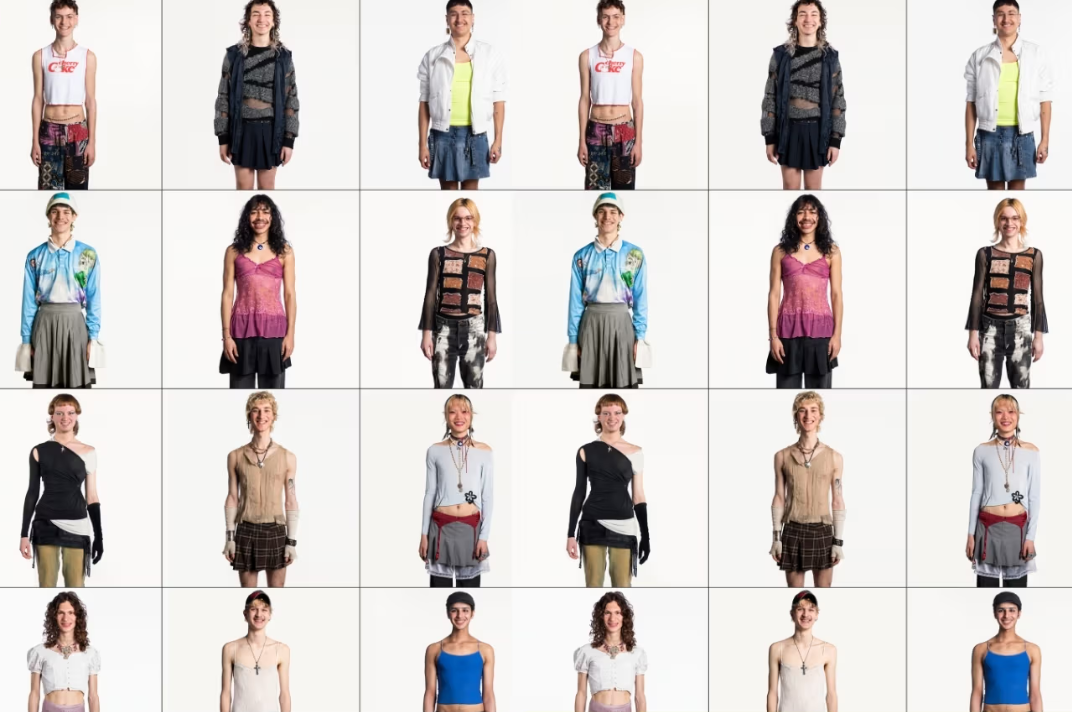
What sets the Exactitudes book apart from typical style photography is its almost scientific precision. Instead of capturing spontaneous street scenes, Versluis and Uyttenbroek invite participants back to their studio and photograph them against neutral backdrops wearing the exact outfit they were first spotted in.
The resulting images are arranged in methodical grids that resemble biological classification plates — rows of individuals grouped not by artistic interpretation, but by shared visual traits. This unique presentation transforms everyday clothing into a lens for examining how identity operates within society. Are we expressing individuality, or simply conforming to recognizable patterns? Exactitudes’ work suggests both impulses are inseparable.
Three Decades of Cultural Observation
Over 30 years, Exactitudes has evolved from a documentary project into a cultural archive. Its subjects span continents and subcultures, capturing not just fashion trends but the social structures that shape them. Each series of portraits becomes a case study in how people use dress, posture, and attitude to stake out a place in the world.
Whether it’s an Italian fur‑clad woman from Milan or a Beijing youth with a bold street aesthetic, the project’s underlying truth remains the same: our aspirations toward uniqueness often fold into larger patterns of belonging. The more we strive to define ourselves, the more we resemble someone else.
Final Edition and Cultural Legacy
The 2026 edition of the Exactitudes photo book marks the final print volume in the series. It stands as both a culmination of decades of meticulous work and a testament to visual anthropology at its most fascinating. The book showcases the breadth of the project, offering viewers a chance to see how style, culture, and identity intersect over time.
What makes this edition especially compelling is its dual nature: it functions as both an art object and a research archive. Each spread invites not just admiration, but reflection on how we see ourselves and one another — and how much of that self‑image is shaped by context and cultural codes.
Where to Buy the Book
Exactitudes is available now through select retailers, including Dover Street Market and Climax Books, making it accessible to collectors and curious readers alike.
Dover Street Market, a home for avant‑garde design and cultural publications, offers the book as part of its curated selection of art and style titles. If you’re interested in photography, fashion history, or cultural studies, this volume provides a rare blend of all three.
Why Exactitudes Still Matters Today
In an era dominated by digital filters, micro‑trends, and online self‑branding, Exactitudes feels especially relevant. The project reminds us that even when we think we’re standing apart, we’re often part of a patterned visual language shaped by culture, community, and shared social experience.
Rather than dismissing individuality, Exactitudes deepens our understanding of it — showing that uniqueness may be less about difference and more about how our choices reflect the larger world we inhabit. As the final book arrives, it closes a chapter on three decades of exploration while opening a broader conversation about what it means to present ourselves in a world of both sameness and difference.