



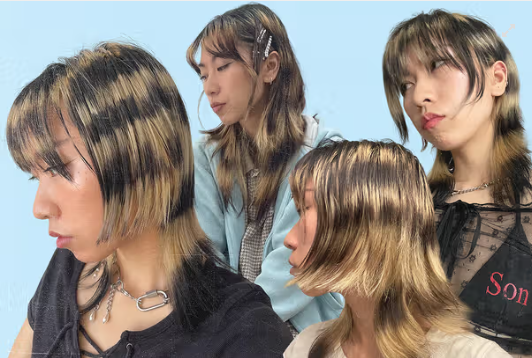
During the 2026 Winter Olympics, figure skater Alysa Liu captured global attention for more than her athletic performance. Alongside her graceful skating and gold-medal victory, fans couldn’t stop talking about her distinctive hairstyle — bold horizontal stripes wrapping around her head like rings. The look, often described as “halo hair,” has quickly become one of the most talked-about beauty trends of the year.
But while Liu helped bring the style into the spotlight, the story behind striped halo hair goes deeper than a single viral moment.
The Hairstyle That Turned Heads at the Olympics
At first glance, Liu’s hairstyle looks like a striking pattern of alternating light and dark bands. The horizontal stripes circle around her head, creating a halo-like effect that contrasts dramatically with her natural hair color.
The bold design immediately stood out in the world of figure skating, a sport where athletes traditionally wear sleek buns or conservative hairstyles. Liu’s expressive look broke that mold, adding a touch of personality and individuality to the ice.
For Liu, however, the hairstyle is more than a fashion choice. Each stripe represents a year in her life, inspired by the rings found inside tree trunks. Just like a tree records its growth through rings, Liu adds a new stripe to her hair every year as a visual symbol of time passing and personal evolution.
This symbolic meaning gives the trend a deeper narrative — turning a beauty statement into a personal story.
From Alternative Subculture to Global Trend
Although Liu popularized the style on a global stage, striped hair actually has roots in alternative fashion communities. Earlier versions of the look can be traced back to the early-2000s “scene” aesthetic, where bold hair colors and raccoon-tail stripes were common.
Those early styles often featured neon colors, dramatic layers, and edgy cuts. Liu’s version, by contrast, is more refined and modern. Her black-and-silver stripes reinterpret the concept in a way that feels both subtle and artistic.
By bringing the style into a mainstream setting like the Olympics, Liu effectively bridged the gap between niche beauty culture and global audiences. What was once a subcultural statement suddenly became a widely recognized trend.
The Evolution of “Halo Hair”
Halo hair refers to a highlighting technique that creates a circular band of lighter color around the crown of the head, producing a glowing halo-like effect.
Unlike traditional highlights or balayage, which are designed to blend naturally with the hair, halo hair emphasizes contrast and shape. The color placement is intentional and visible, forming rings or stripes that wrap around the head.
This approach creates a striking visual effect. When the hair moves, the rings catch the light and emphasize the layered structure of the style. Because the placement is concentrated in specific areas, the look also requires less frequent root maintenance compared to full-head bleaching.
For Liu, the hairstyle began as a do-it-yourself experiment before she later worked with a professional colorist to refine the color tones and make the stripes more defined.
An Early Inspiration Behind the Look
Before the hairstyle gained mainstream attention, some early adopters were already experimenting with striped color techniques. One example is Bay Area artist Belle Zhao, who began wearing alternating black and blonde stripes in 2022.
For Zhao, the style started as a practical solution. By alternating her natural hair color with bleached sections and adding new stripes gradually, she was able to extend the time between root touch-ups while reducing damage from constant bleaching.
What began as a practical hair experiment eventually became a defining visual signature. Zhao noted that the look attracted attention wherever she went — proving how powerful and expressive a hairstyle can be.
A Trend Fueled by Self-Expression
Part of the reason striped halo hair resonates with so many people is its emphasis on individuality. Unlike uniform highlights, the rings can be placed in different areas, dyed in different colors, or added gradually over time.
This flexibility allows the hairstyle to evolve alongside the person wearing it.
For Liu, each stripe represents a year of growth. For others, it may simply be a bold aesthetic choice. Either way, the trend reflects a broader shift in beauty culture toward personalization and creative expression.
In recent years, hair trends have moved away from subtle, natural finishes and toward more experimental designs — bright colors, unconventional placements, and artistic patterns. Liu’s halo stripes fit perfectly into this movement.
Why the Look Is Resonating Now
Several factors have helped propel halo hair into the spotlight:
- Celebrity influence: Liu’s Olympic visibility introduced the look to a global audience.
- Y2K nostalgia: The revival of early-2000s aesthetics has brought striped highlights back into fashion.
- Personal storytelling: The symbolic “tree ring” concept adds emotional depth to the hairstyle.
- Creative freedom: The technique can be customized in countless ways.
Together, these elements make striped halo hair feel both nostalgic and new.
A Hairstyle That Tells a Story
Ultimately, the appeal of Alysa Liu’s striped halo hair goes beyond aesthetics. It represents a shift in how people approach beauty — not just as decoration, but as a form of self-expression.
Each ring in Liu’s hair tells part of her story, marking the passage of time and the experiences that shape who she is. In a world where beauty trends often come and go quickly, a hairstyle with that kind of meaning stands out.
And judging by the growing buzz around halo stripes, Liu’s distinctive look may just inspire the next wave of creative hair experimentation.